Skip to contentInformation for people with disabilityInformation on accessibility

Australian Electoral Commission
The Redistribution Committee for Tasmania published its report today proposing new boundaries for the state’s federal electorates.
Committee Chair and Electoral Commissioner, Jeff Pope, said that under the proposal there would be a significant proportion of Tasmanians in the south of the state who’d be in a different electorate.
“Around 27 per cent of Tasmanians would change electorate with the vast majority coming from proposed changes to the electorates of Clark, Franklin and Lyons,” Mr Pope said.
“Proposed changes to Franklin in particular would focus the electorate in the southeast, so it comes together geographically rather than being split by the neighbouring division of Clark and the River Derwent.”

AEC YouTube - Tassie redistribution proposal
“All proposed changes are driven by the need to balance current and projected enrolment across electorates but also to have electorates that reflect connected communities of interest and natural boundaries wherever possible.”
“The Committee is keen to hear the community’s ideas about the proposal. In particular, noting the changes proposed, the Committee would like further suggestions for a potential alternative name for the electorate of Franklin – ideally, names proposed to honour deceased Australians who have a connection to Tasmania’s southeast.”
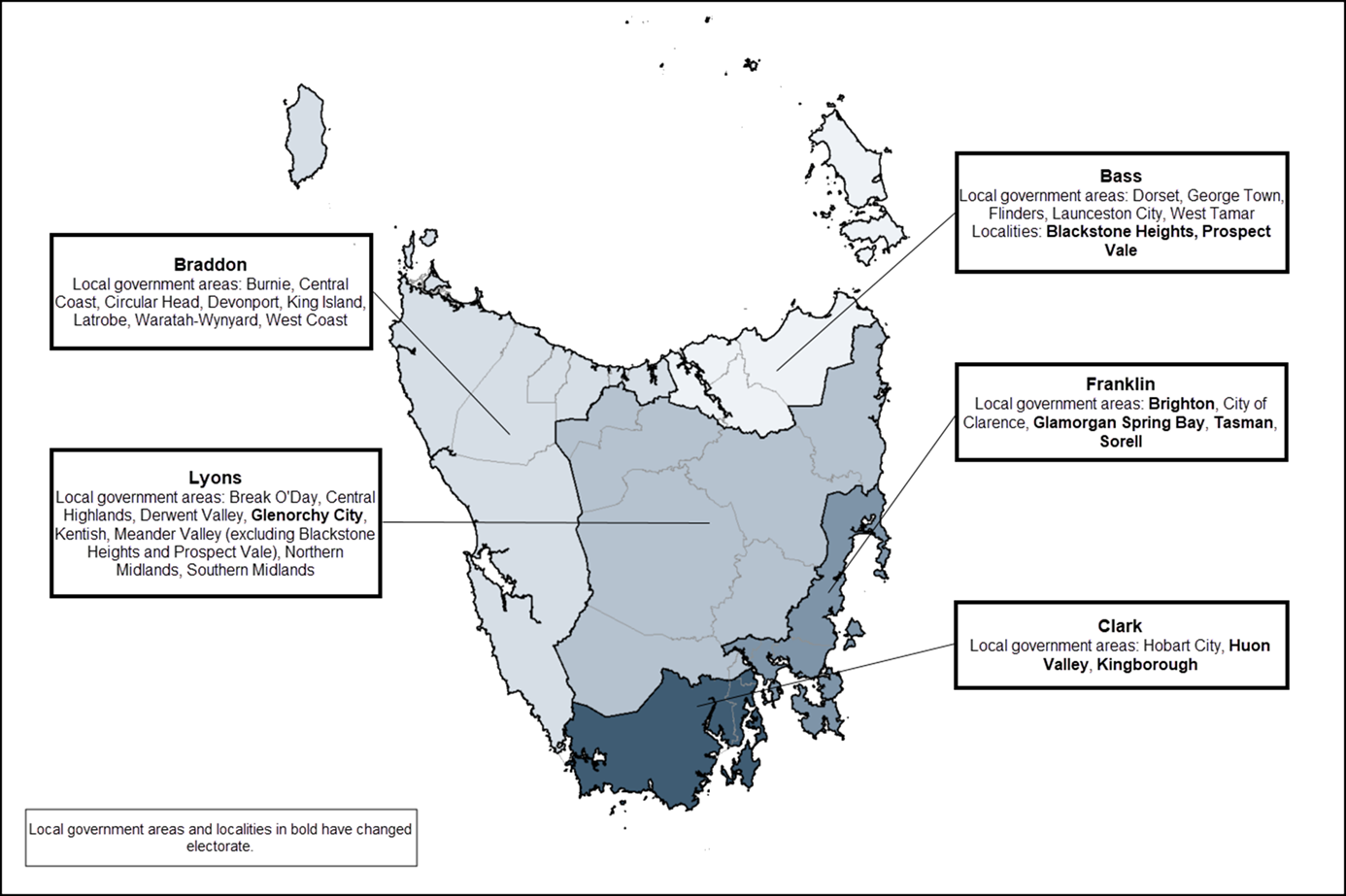
Braddon: Remains unchanged, reflecting its stable enrolment and strong, clearly defined communities of interest.
Bass: Gains the localities of Blackstone Heights and Prospect Vale from the electorate of Lyons, reflecting the connection these communities have with Launceston’s urban, economic and service networks.
Franklin: Gains the local government areas of Brighton, Glamorgan Spring Bay, Sorell and Tasman, strengthening its south-eastern coherence and resolving its non-contiguity.
Clark: Becomes Australia’s southern-most electorate, taking in the Huon Valley local government area and the remainder of Kingborough local government area, better reflecting how communities connect and travel across the region.
Lyons: Is reshaped to become a smaller, mainly south‑central electorate gaining Glenorchy local government area and losing most of the east coast local government areas.
Geographic separation within electorates is removed, with the River Derwent forming a clear and recognisable boundary. Every electorate includes an urban or regional centre, strengthening access and representation. Importantly, the proposed changes meet the numerical requirements of the redistribution quota and projected enrolment quota for Tasmania.
Editor’s notes:

The AEC acknowledges the Traditional Owners of Country throughout Australia and recognises their continuing connection to land, waters, culture and community. We pay our respects to Elders past, present and emerging.